Sparking Interest in Deep Brain Stimulation
- Mary Gao

- Nov 2, 2021
- 6 min read
Updated: Nov 13, 2021
Mary Gao for Health Empowerment Coalition
Parkinson’s Disease (PD) is a widespread, cureless neurological illness that affects movement. Nearly 10 million people worldwide, and almost 1 million in the U.S. alone are living with this disease. In the late 1980’s, Alim Benabid developed a method to improve the symptoms of PD. It was called deep brain stimulation or DBS, and it worked by electrically stimulating parts of the brain associated with PD.⁸ Since then, DBS has been commonly used to treat a multitude of movement disorders. In 2002, DBS was officially approved by the Food and Drug Administration (FDA) as a treatment for Parkinson’s Disease.¹ Since then, it became one of the most mainstream methods of treatment, and it is now being studied in clinical trials to treat depression,³ OCD,⁴ and Tourette Syndrome.²
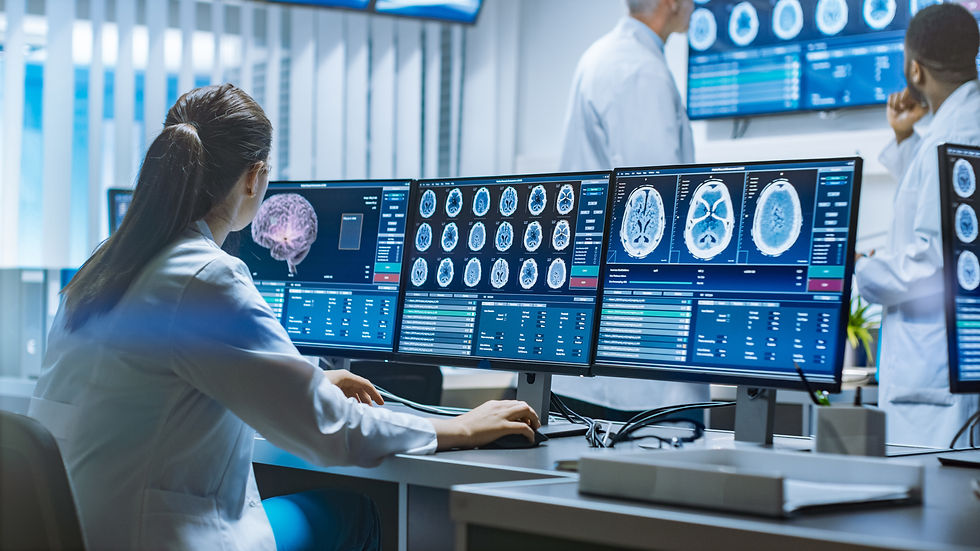
The procedure for DBS involves putting electrical implants in the patient's body that send signals to the brain in order to stop PD symptoms. First, neurosurgeons use MRIs or CT scans to map the brain and determine which areas of the brain cause PD symptoms. Currently, to treat Parkinson’s disease, the lead is implanted to stimulate regions of the brain called the subthalamic nucleus and globus pallidus,⁴ areas of the brain that affect movement. A device is then implanted under the skin in the upper chest region which is used to control electrodes placed in problem areas of the brain. The device then sends electrical signals to the brain to disrupt PD-related signals that cause symptoms like tremors and involuntary muscle movement. Oftentimes, neurosurgeons prefer to keep patients awake during surgery so that they can test the effects of the surgery while operating.⁴
Like most procedures, deep brain stimulation has both benefits and risks. The main benefits include a significant reduction of severe symptoms, especially motor control. Studies have also shown that deep brain stimulation can affect mood. Many patients of Parkinson’s Disease who undergo DBS report more positive mood and decreased anxiety.⁵ In addition, DBS does not damage the brain, and it provides a method of treatment specific to the individual that allows the physician to subjectively alter treatment based on the patient’s needs. However, the procedure itself is extremely expensive and invasive. There are always possibilities of complications, although DBS is typically considered to be a relatively safe procedure.⁶ Surgical complication rates are varied, but the most reported complication is infection.⁷ There are also many side effects associated with deep brain stimulation; the most common are cognitive impairments, changes in behavior, and psychiatric effects.⁹ Because PD treatment often involves areas of the brain associated with cognition and emotions, like the subthalamic nucleus, other potential side effects are cognitive and emotional changes. Although DBS has its fair share of risks, it is still considered to be a better option to more dangerous surgeries, such as destroying brain tissue, and continuous medication.⁹
Scientists have also discussed the ethical issues with deep brain stimulation. Not everyone who suffers from Parkinson’s disease or other neurological illnesses is recommended to undergo deep brain stimulation. However, patients of Parkinson’s Disease who do not have any active cognitive or psychological issues and do have serious motor control issues, serious tremors, and problems with medication are considered good candidates for DBS.⁷ DBS may be especially good for PD patients on medications. Many patients who appear to respond well to medication treatments initially will experience fluctuations, in which the drug will work well for some amount of time and then go through unpredictable periods of not working.⁹ For these patients, deep brain stimulation may be a more favorable option. Currently, the determining criteria to get DBS for other illnesses outside of PD have not been well studied.
Some exclusion criteria for DBS include dementia, major depression, or substance abuse. However, some scientists believe that from an ethical perspective, patients should only be justifiably excluded from treatment if the procedure will do more harm than good to the patient. If it is expected that the benefit for someone with dementia or depression outweighs the risk, they should not be excluded.⁹
It is also unclear if some of these exclusion criteria are appropriate. For example, there is not enough evidence demonstrating that specifically patients with dementia will develop negative cognitive side-effects after deep brain stimulation, as patients without dementia experience them as well.¹⁰ Scientist Emily Bell also discusses ethical issues regarding patients’ access to social support and how patients without it should not be excluded because it creates disparities in the level of care being delivered.¹¹ This goes to show that clear-cut criterion can impose various issues, and care decisions should not be so black and white.
Moving away from Parkinson’s Disease, deep brain stimulation is also studied in the treatment of major depressive disorder, another disease that can majorly affect a patient’s life.¹² Other treatments for depression include psychotherapy and electroconvulsive therapy, but many patients do not respond to these treatments. DBS was one of the alternative therapeutic methods investigated for this cause. Although DBS is still new, it has shown promise in preliminary trials with patients of treatment-resistant depression or TRD.¹² Scientists initially targeted an area of the brain known as the subcallosal cingulate or Brodmann area 25. Neuroimaging studies showed that this region was a critical player in depression and antidepressant response. In the follow-up months, it was discovered that most symptoms for depression improved, such as insomnia, decreased energy, apathy, poor concentration, and disturbed social contact.¹² The brain region known as the nucleus accumbens was also targeted for TRD, based on its role in reward-seeking behavior. For similar reasons, scientists have also targeted the medial forebrain bundle. Although high response rates were observed and the preliminary data shows promise, more experience is required before establishing DBS as an official treatment for depression.¹²
Prior to studying depression, deep brain stimulation was also used for patients with obsessive compulsive disorder (OCD). About 40-60% of OCD patients experience symptoms despite being properly medicated,¹² so DBS was sought as an alternative treatment. Several brain structures were targeted for DBS: the anterior limb of the inner capsule, the ventral caudate, the subthalamic nucleus, the inferior thalamic peduncle, and the nucleus accumbens.¹³ These structures were all selected because they were considered part of the neural network responsible for OCD. Ultimately, it was concluded that stimulation at the subthalamic nucleus and nucleus accumbens (bilaterally) is effective treatment for OCD.¹³
Deep brain stimulation is not suited for everyone. It is a method usually chosen to improve the quality of a patient’s life due to a serious limitation, not to cure disease.⁹ However, it has shown promise as an emerging treatment for many neurological disorders, and it has potential to expand to treat others as well, such as eating disorders, or addiction. Before that, however, more research still needs to be done on the current in-progress disorders scientists are studying now: depression and OCD.
References:
Gardner, J. (2013). A history of deep brain stimulation: Technological innovation and the role of clinical assessment tools. Social Studies of Science, 43(5), 707-728. https://doi.org/10.1177/0306312713483678
Martinez-Ramirez, D. et al. (2018). Efficacy and Safety of Deep Brain Stimulation in Tourette Syndrome: The International Tourette Syndrome Deep Brain Stimulation Public Database and Registry. JAMA Neurology, 75(3), 353-359.
Bergfeld, I.O. et al. (2016). Deep Brain Stimulation of the Ventral Anterior Limb of the Internal Capsule for Treatment-Resistant Depression: A Randomized Clinical Trial. JAMA Psychiatry, 73(5), 456-464.
Vitek, J.L. (2008). Deep brain stimulation: how does it work? Cleveland Clinic Journal of Medicine, 75(Suppl 2), S59-65.
Campbell M.C. (2012). Mood response to deep brain stimulation of the subthalamic nucleus in Parkinson’s disease. Journal of Neuropsychiatry and Clinical Neurosciences, 24(1), 28-36. https://doi.org/10.1176/appi.neuropsych.11030060
Fenoy A.J. & Simpson R.K. (2014). Risks of common complications in deep brain stimulation surgery: management and avoidance. Journal of Neurosurgery, 120(1), 132-139. https://doi.org/10.3171/2013.10.JNS131225
Bronstein, J.M. et al. (2011). Deep brain stimulation for Parkinson disease: an expert consensus and review of key issues. Arch Neurology, 68(2), 165. doi: 10.1001/archneurol.2010.260
Oliveria, S.F. (2018). The dark history of early deep brain stimulation. The Lancet Neurology, 17(9), 748. https://doi.org/10.1016/S1474-4422(18)30237-0
Clausen, J. (2010). Ethical brain stimulation – neuroethics of deep brain stimulation in research and clinical practice. European Journal of Neuroscience, 32(7), 1152-1162. https://doi-org.ezproxy.bu.edu/10.1111/j.1460-9568.2010.07421.x
Lang A.E., et al. (2006). Deep brain stimulation: preoperative issues. Movement Disorders, 21(S14), S171-S196. https://doi-org.ezproxy.bu.edu/10.1002/mds.20955
Bell E., Mathieu G., & Racine E. (2009). Preparing the ethical future of deep brain stimulation. Surgical Neurology, 72(6), 577-586. https://doi.org/10.1016/j.surneu.2009.03.029
Delaloye, S., & Holtzheimer P.E. (2014). Deep brain stimulation in the treatment of depression. Dialogues in Clinical Neuroscience, 16(1), 83-91. DOI: 10.31887/DCNS.2014.16.1/sdelaloye
Hamani C. et al. (2014). Deep Brain Stimulation for Obsessive-Compulsive Disorder: Systematic Review and Evidence-Based Guideline Sponsored by the American Society for Stereotactic and Functional Neurosurgery and the Congress of Neurological Surgeons (CNS) and Endorsed by the CNS and American Association of Neurological Surgeons. Neurosurgery, 75(4), 327-333. https://doi.org/10.1227/NEU.0000000000000499
Author: Mary Gao
Edited by: Annaleigh Burgess, Maggie Sell, and Emily Lin
The Health Empowerment Coalition is a student-led organization that aims to empower individuals across the United States to improve their health literacy and take charge of their health. The views expressed in this article are the authors’ own and do not reflect the official opinions of the institutions at which they work and study. Additionally, the content in this article is not intended to provide medical advice.


Comments